Plenary Speakers
All 2026 IVEC plenary talks take place in San Carlos 3-4. Don’t miss them!
Daily plenary schedule
TUESDAY, APRIL 21, 2026, 8:10 am
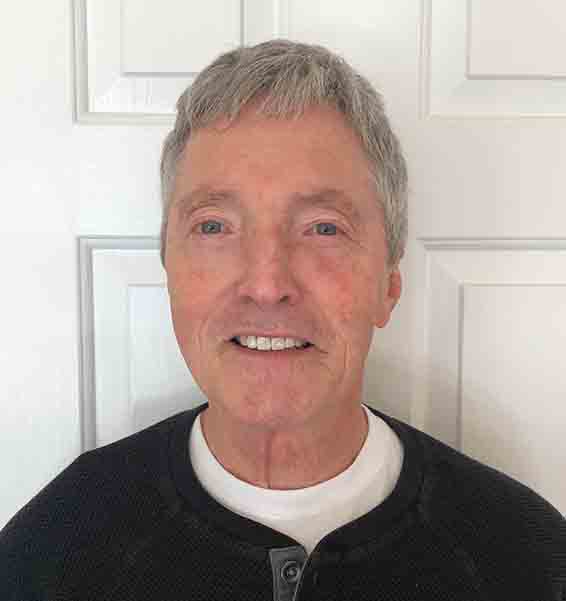
Dan M. Goebel, Jet Propulsion Laboratory
Space is an exciting arena these days with new science missions, launch vehicles, communications constellations, Earth observation methods, and various satellites of all sizes and capabilities in the news. New Space represents a revolution in using space in many non-traditional ways, and new industries and startups in this area are emerging every day. Technologies that had their birth in the vacuum electronics industry are being exploited and adapted in the rush to provide new space capabilities. This is most apparent in the adoption of electric propulsion in many of the new satellites and constellations, which is because of the great advantages electric propulsion provides in reducing the amount of propellant needed to be launched for any mission application. This talk will discuss the emerging New Space applications and the describe some of the vacuum-device technologies important in electric thrusters and satellites.
Dr. Dan M. Goebel received a B.S. in physics, an M.S. in electrical engineering, and a Ph.D. in applied plasma physics from the University of California, Los Angeles, in 1977, 1978 and 1981 respectively. He is a Fellow and Senior Research Scientist at Jet Propulsion Laboratory, and an Adjunct Prof. of Electrical Engineering and Aerospace Engineering at UCLA. At JPL he is the Chief Engineer of the Psyche Mission and also responsible for the development of advanced electric propulsion systems and other spacecraft technologies. Previously he worked at Hughes Research Laboratories and Hughes/Boeing Space before joining JPL in 2003. Dr. Goebel is a member of the National Academy of Engineering, Fellow of the National Academy of Inventors, and Fellow of the AIAA, IEEE, and APS. He is the author of over 175 technical journal papers, 180 conference papers, two textbooks on Electric Propulsion published in 2008 and 2023, and holds 60 patents.
https://scienceandtechnology.jpl.nasa.gov/people/d_goebel
TUESDAY, APRIL 21, 2026 8:55 am
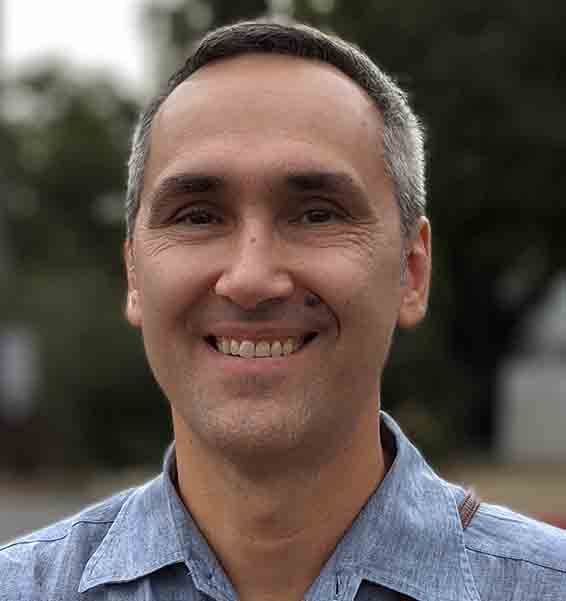
Oleksiy Kuleshov, O. Ya. Usikov Institute for Radiophysics and Electronics of the National Academy of Sciences
Among vacuum electron devices, gyrotrons currently provide the highest output power and are widely employed at frequencies ranging from several tens of gigahertz up to 1 THz. Low-voltage operation and operation at higher cyclotron harmonics offer effective approaches to reducing theoverall size of these devices for many practical applications, including dynamic nuclear polarization (DNP) NMR spectroscopy, THz imaging, and materials science. At the same time, compact, frequency-tunable Cherenkov devices delivering moderate output power are of considerable interest for these applications. This interest is illustrated by the typical performance characteristics of clinotrons—powerful modifications of resonant backward-wave oscillators—operating in the millimeter-wave and THz ranges. Several clinotron modifications areproposed to improve oscillator performance in the sub-THz and THz frequency ranges. These improvements include optimization of conventional clinotron designs to enhance beam–wave interaction efficiency and to ensure single-mode radiation in oversized cavities. In addition, a new design approach for THz Cherenkov oscillators and amplifiers is considered, based on the excitation of hybrid bulk–surface modes in interaction circuits employing bi-periodic gratings. Plans for future research and the development of next-generation THz vacuum electron devices are also outlined.
Dr. Oleksiy Kuleshov
is deputy head of the Department of Vacuum Electronics at the O. Ya. Usikov Institute for Radiophysics and Electronics of the National Academy of Sciences of Ukraine, Kharkiv, Ukraine, where he leads research and development of compact, frequency-tunable sources in the millimeter-wave and terahertz ranges. In December 2025, he joined the Faculty of Electrical and Computer Engineering at the University of California, Davis, as a Fulbright Visiting Scholar. He received his M.S. degree in radio physics and electronics from V. N. Karazin Kharkiv National University, Kharkiv. He earned his PhD (2010) and Doctor of Sciences (2021) degree in Physical Electronics from the O. Ya. Usikov Institute for Radiophysics and Electronics of the NAS of Ukraine. From 2012 to 2020, he held multiple appointments as a Visiting Professor at the Research Center for Development of Far-Infrared Region, University of Fukui, Japan, where he worked on the development of Cherenkov oscillators and high-frequency gyrotrons for DNP-NMR spectroscopy and other applications. In 2014, he was a Visiting Fellow at the Institute for Protein Research, Osaka University, Japan, where he was responsible for ensuring long-term, high-stability operation of a 460-GHz continuous-wave gyrotron used for 700-MHz DNP-NMR spectroscopy.
WEDNESDAY, APRIL 22, 2026, 8:10 am
Presented by Dan M. Goebel, Jet Propulsion Laboratory
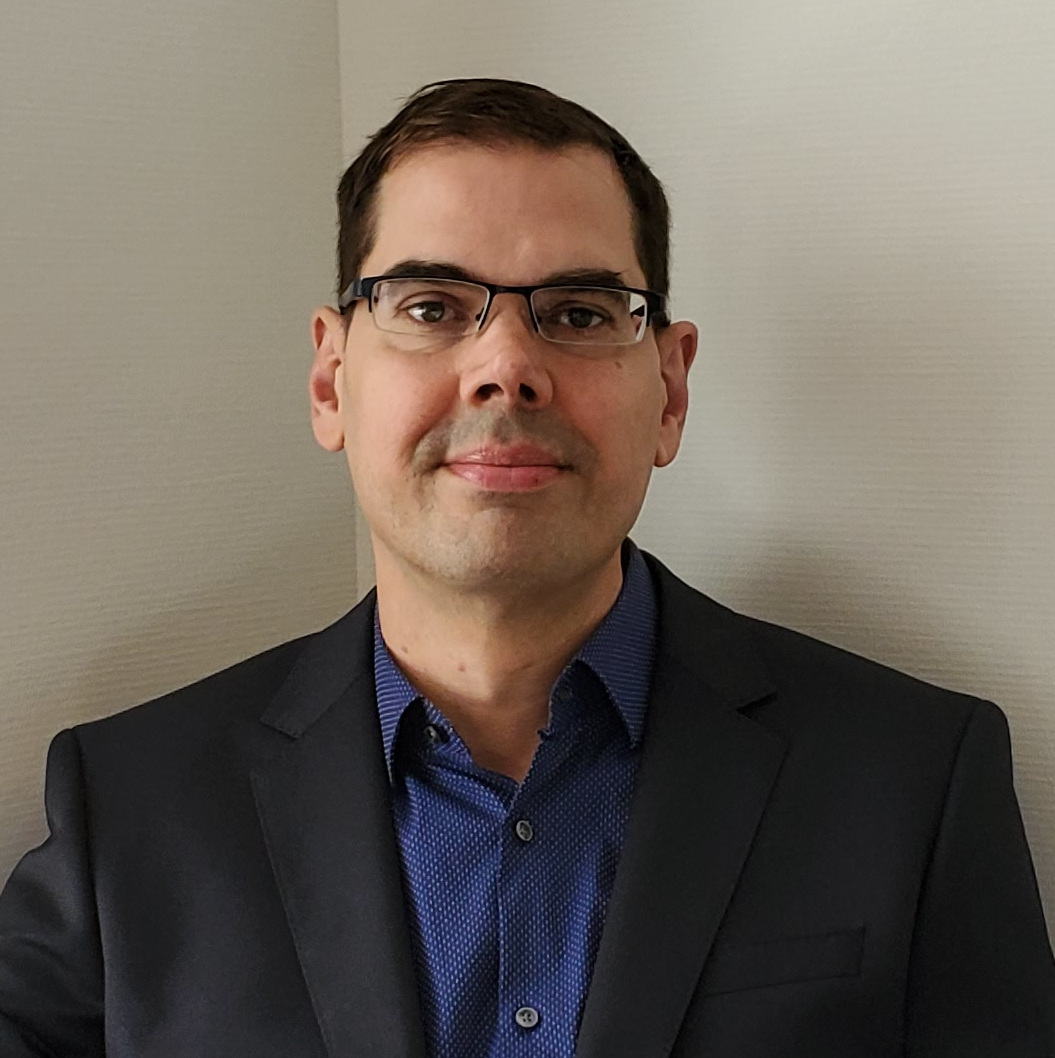
Wayne Harvey, Jet Propulsion Laboratory
Voyager 2 and Voyager 1 launched on Aug. 20 and Sept. 5 1977, respectively, on a mission to our solar system’s outer planets, with uncertainty regarding how many of those planets would be visited. Originally conceived of as Mariner Jupiter Saturn ’77 (MJS ’77), NASA had agreed to support a mission to visit Jupiter and Saturn, with a particular priority of a close flyby of Saturn’s moon Titan. Each spacecraft carried a primary and redundant X-Band TWTA, as well as a S-Band TWTA, the backup for which was a Solid State Amplifier (SSA).
The lifetime requirements for these TWTAs were in keeping with the 4-year cruise duration for each of these spacecraft to reach Saturn. Meanwhile, some at JPL had ambitions to execute the “Grand Tour” of all the outer planets except Pluto, as circumstances had the Voyager spacecraft ready to launch in a once-every-176-year enabling planetary alignment. Completing the Grand Tour would require an additional 8 years.
It is worth noting that there was no serious planning for a Voyager Interstellar Mission (VIM) at the time of the Voyager launches.
This talk will provide an overview of the TWTA technology involved and will examine the remarkable 48 + year performance history of these mid-seventies technology TWTAs, based on the flight telemetry for these units. By any measure of success, these TWTAs have far exceeded expectations. We will touch on the accomplishments of the Voyager mission and will provide some context of assorted spacecraft hardware failure (including one TWTA). Along the way we’ll address the history of archiving this data, give examples of very old-school recording methods and note how the TWTAs have outlasted a number of archiving systems in the time since launch.
Dr. Dan M. Goebel received a B.S. in physics, an M.S. in electrical engineering, and a Ph.D. in applied plasma physics from the University of California, Los Angeles, in 1977, 1978 and 1981 respectively. He is a Fellow and Senior Research Scientist at Jet Propulsion Laboratory, and an Adjunct Prof. of Electrical Engineering and Aerospace Engineering at UCLA. At JPL he is the Chief Engineer of the Psyche Mission and also responsible for the development of advanced electric propulsion systems and other spacecraft technologies. Previously he worked at Hughes Research Laboratories and Hughes/Boeing Space before joining JPL in 2003. Dr. Goebel is a member of the National Academy of Engineering, Fellow of the National Academy of Inventors, and Fellow of the AIAA, IEEE, and APS. He is the author of over 175 technical journal papers, 180 conference papers, two textbooks on Electric Propulsion published in 2008 and 2023, and holds 60 patents.
https://scienceandtechnology.jpl.nasa.gov/people/d_goebel
THURSDAY, APRIL 23, 2026 8:10 am
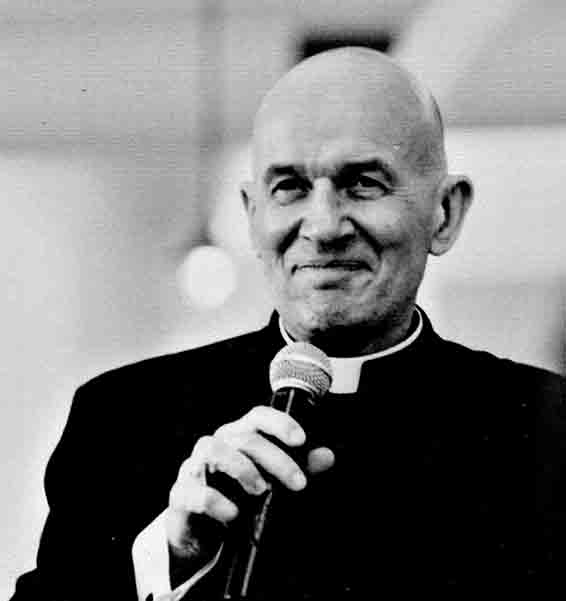
Hien Tran, North Carolina State University
Design optimization techniques are central in various areas, such as manufacturing, engineering, biology, and management. Engineering design is an iterative process that engineers follow to develop a product that meets specified criteria and constraints. In fact, this process is time-consuming and can be tedious and repetitive, often involving manual calculations. Design optimization is a process that can replace an iterative design process to improve a design with the best possible performance according to a set of predefined criteria. The primary goal is to find the optimal set of design variables that maximize or minimize an objective function while satisfying all design constraints. In this talk, we present our joint work with engineers at Calabazas Creek Research, Inc. in leveraging design optimization techniques to improve the design of several electron gun devices, including a multiple beam electron gun. In addition, recent results on the integration of machine learning to automatically characterize gyrotrons for optimum performance will also be presented.
Dr. Hien Tran is a Professor of Mathematics, an Alumni Association Distinguished Graduate Professor, Associate Head of the Department of Mathematics, and Director of the Center for Research in Scientific Computation, all at NC State University. During his 37 year career, his research is in the areas of development and application of innovative and novel applied mathematical techniques in biomedicine, as well as other areas of science and engineering. His research has led to two textbooks, Cardiovascular and Respiratory: Systems: Modeling, Analysis and Control, and Mathematical and Experimental Modeling of Physical and Biological Processes, a patent, and more than 150 peer-reviewed journals and conference proceedings. His research has been continuously funded over the years by NSF, NIH, AFOSR, ARO, ARPA, and companies, including Calabazas Creek Research, Inc., IBM, Aerospace Corporation, and Intelligent Fusion Technology.